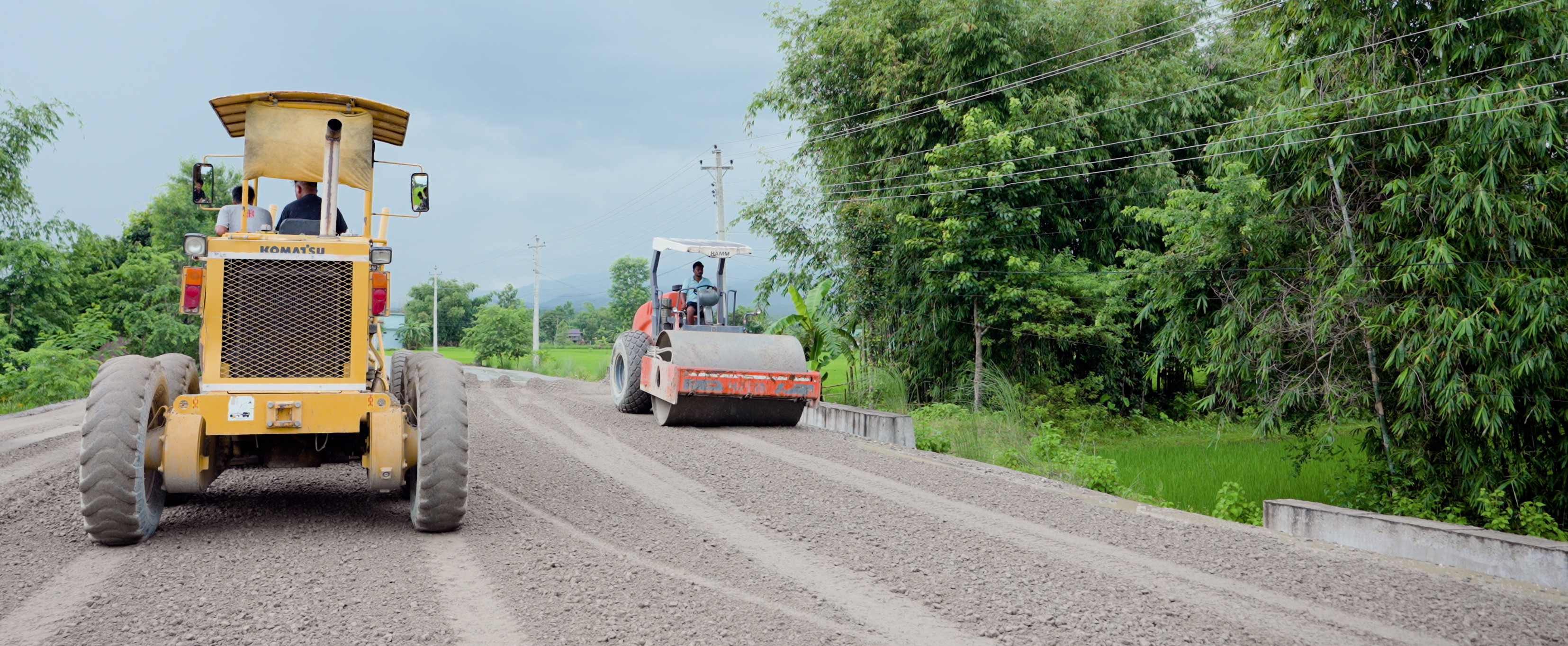
If you've requested bids for a road, bridge, or building project in Nepal, you've probably seen contractors list a "Class" next to their registration — Class 'A', 'B', 'C' or 'D'. It isn't a marketing badge. It's a legal classification issued by Nepal's Department of Cottage and Small Industries / local licensing authorities that determines what size and type of contract a company is legally allowed to bid on and execute.
The four contractor classes, briefly
Nepal's construction licensing system tiers contractors from D (smallest, local-level work) up to A (the highest tier, with no upper limit on project value). Moving up a class requires demonstrated technical capacity, a minimum paid-up capital, a track record of completed projects, and — critically — proof that the company owns or can mobilise the plant and machinery a project of that scale requires. A Class 'D' contractor physically cannot bid on a national highway package; the licensing system exists precisely to stop that mismatch from happening.
Why Class 'A' status is the one that matters for national infrastructure
A Class 'A' license removes the value ceiling. That's what allows a contractor to bid on multi-hundred-million or multi-billion rupee packages — national highways, expressway lots, hydropower civil works, tunnels — the projects that require sustained mobilisation across years, not months. Motidan Construction Sewa has held Class 'A' status since shortly after formal incorporation in 2014, and it's the license that has let us take on work like the Kathmandu-Terai/Madhesh Fast Track expressway (including tunnel and bridge works on Lot 8B), multiple sections of the Mahendra and Madan Bhandari highways, and district-scale mining and quarrying contracts.
What to actually check before you hire
A license class is a floor, not a guarantee. When you're evaluating a contractor for a serious project, ask:
- Is the license current and does it match the project category? Road, building and hydropower licenses can be tracked separately in some jurisdictions.
- Does the company self-perform or subcontract everything? A contractor that owns its earthmoving, paving and materials-production equipment controls schedule and quality far more tightly than one renting machinery project-by-project.
- What's the blacklisting and dispute record? Nepal's public procurement portals list blacklisted contractors. A clean record across a company's full project history — not just its most recent few contracts — is the real signal.
- Can they show completed work of comparable scale and terrain? A contractor experienced in Terai flatland earthworks isn't automatically equipped for high-altitude, fragile-geology mountain roads, and vice versa.
Motidan's track record, briefly
Since 2009, Motidan Construction Sewa has delivered projects across 70+ districts of Nepal — from Terai highway corridors to high-altitude roads in Mustang and Dailekh — with zero project failures and zero blacklisting, and has worked on programs connected to ADB and World Bank-funded infrastructure. We operate a self-owned fleet of 300+ machines rather than subcontracting earthworks and paving, which is what lets a Class 'A' license translate into an actual delivered project rather than just a bid eligibility.
If you're scoping a road, bridge, tunnel, or building project and want to talk through what a Class 'A' contractor can take on, get in touch — or browse our completed and ongoing projects for a sense of scale and terrain we work in.